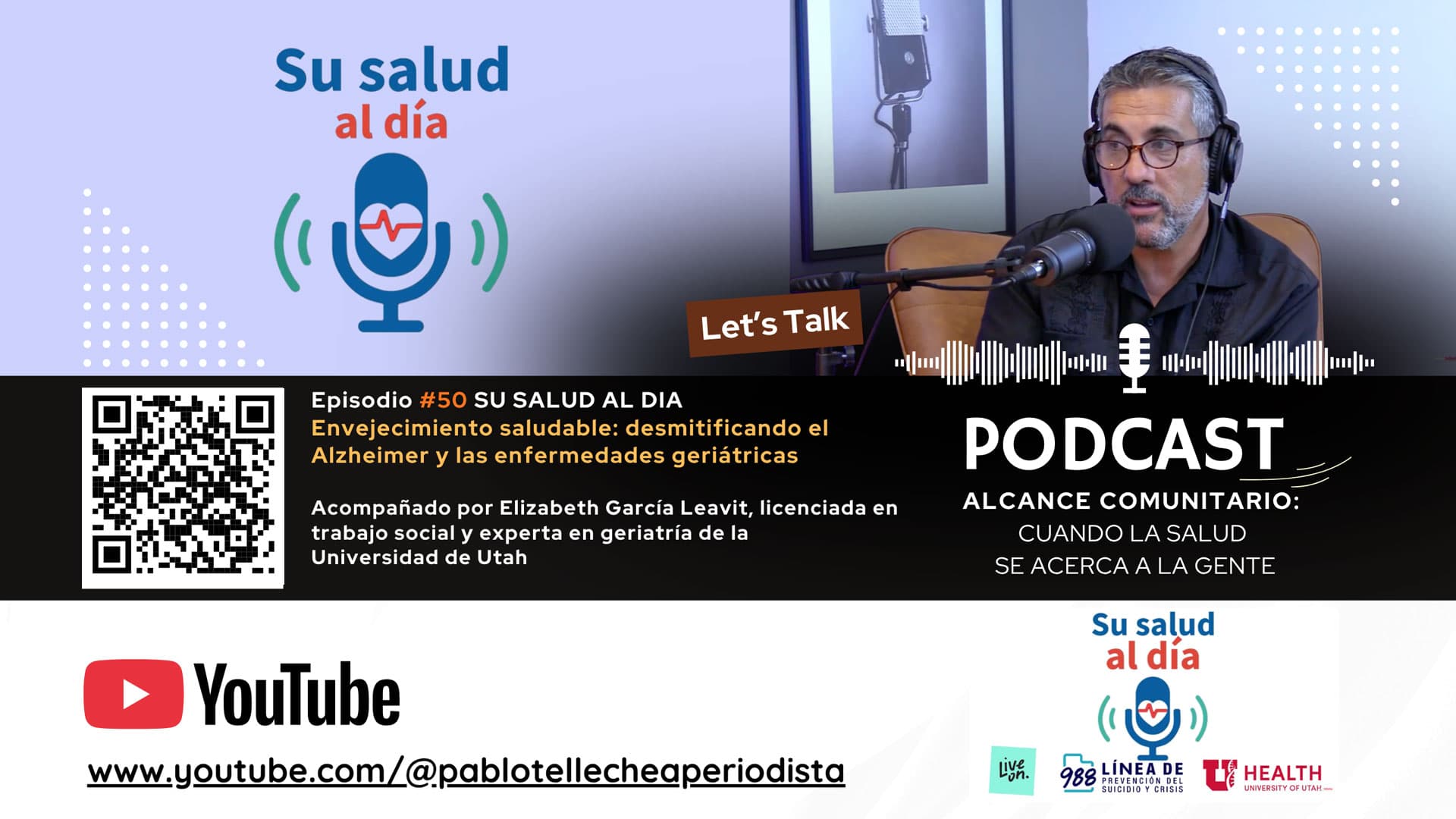
Envejecimiento saludable: desmitificando el Alzheimer y las enfermedades geriátricas
El diálogo se centra en aclarar mitos comunes sobre la vejez, la demencia y el cuidado de los adultos mayores. Se destaca que la pérdida de memoria y el deterioro cognitivo no son procesos normales del envejecimiento, sino indicadores de una enfermedad subyacente. Asimismo, se analiza la necesidad de una mayor planificación familiar y de políticas públicas que apoyen a los cuidadores. Finalmente, se abordan los factores de riesgo y de protección (como la actividad física, social y mental) utilizando la metáfora de un "balde de agua" para ilustrar cómo se puede mantener la independencia funcional a pesar de los daños estructurales en el cerebro.
"Pienso que el error más grande es la idea de que la demencia y las fallas que vemos son una parte normal de la edad, que no es. Sabemos que cuando la gente tiene cambios de la memoria o cambios de pensar, hay gente que llega a los 100 años y tiene la memoria perfecto. Cuando hay cambios, cuando hay un gran diferencia, usualmente es por causa de una enfermedad..." Elizabeth García Leavit
Healthy Aging: Debunking Alzheimer’s Disease and Other Geriatric Conditions
In this episode of Su Salud al Día (#50), host Pablo Tellechea examines the impact of geriatric diseases in Utah, where an estimated 38,000 older adults are living with Alzheimer’s disease and more than 115,000 family caregivers provide unpaid care. Joined by Elizabeth García Leavit, a licensed social worker and geriatric specialist at the University of Utah, the program explores what it truly means to age healthily and discusses the challenges posed by the shortage of specialists in this critical area of public health.
The conversation focuses on dispelling common myths about aging, dementia, and caring for older adults. It emphasizes that memory loss and cognitive decline are not normal aspects of aging but rather signs of an underlying disease. The discussion also highlights the need for better family planning and stronger public policies to support caregivers. Finally, the episode examines both risk and protective factors—such as physical, social, and mental activity—using the metaphor of a “bucket of water” to illustrate how people can preserve their functional independence despite structural changes in the brain.
“I think the biggest misconception is the belief that dementia and the cognitive changes we see are a normal part of aging—they are not. We know that when people experience significant changes in memory or thinking, it is not simply because they are getting older. There are people who reach 100 years of age with excellent memory. When these changes occur, especially when there is a noticeable decline, they are usually caused by an underlying disease.” — Elizabeth García Leavit